
Industrial Estate Surfacing
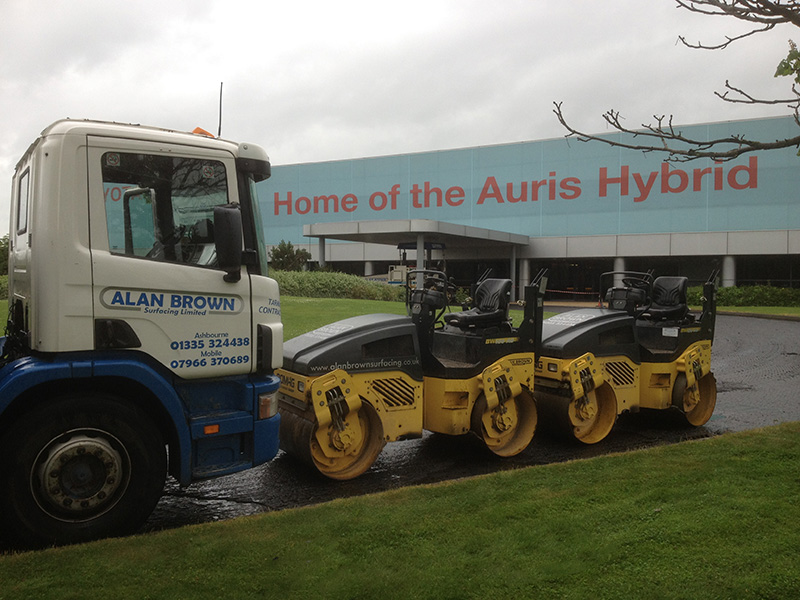
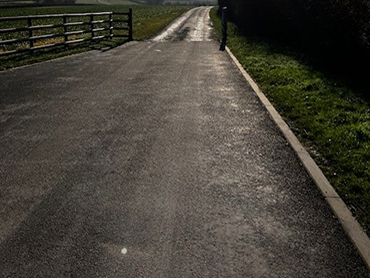
We work on many industrial projects, from surfacing industrial estates and access roads to resurfacing on site car parks.
We have recently completed industrial projects for Manthorpe Engineering, Bayliss Engineering and Burrows Recovery. If you are looking to improve the roads around your business then give us a call to get an on site quote.
Alan Brown Surfacing have proven results for setting exceptional standards in cost control, planning, scheduling and project safety. We have experience that gives us a competitive advantage over others in our field.
Why choose us
- + Competitive Pricing
- + Comprehensive Quotations
- + Superior Quality Results
- + Highest Grade Materials
- + On Time and on Budget
- + Customer Satisfaction
The Process
Resurfacing an industrial estate involves addressing the specific needs and challenges of roads within the area, typically catering to heavy traffic, including trucks and machinery. Here's a guide tailored to resurfacing an industrial estate:
Conduct a thorough assessment of the roads within the industrial estate, considering factors such as traffic volume, types of vehicles, surface damage, and drainage issues.
Develop a comprehensive plan that outlines the scope of the resurfacing project, prioritises areas needing attention, and considers budgetary constraints and timelines.
Coordinate with property owners, tenants, and relevant stakeholders to minimise disruptions and ensure access to businesses within the industrial estate during construction.
Clear the roads of debris, vegetation, and any obstacles that may impede the resurfacing process or pose safety hazards.
Repair underlying structural issues, such as potholes, cracks, or base instability, to provide a stable foundation for the new surface layer.
Consider the needs of industrial activities and businesses operating within the estate, ensuring minimal disruption to operations during preparation and construction.
Use specialised equipment, such as planing machines or grinders, to remove the existing surface layer of the roads, as necessary.
Address any drainage problems or unevenness in the road surface to improve water runoff and prevent pooling, which can be particularly important in an industrial setting where spills or leaks may occur.
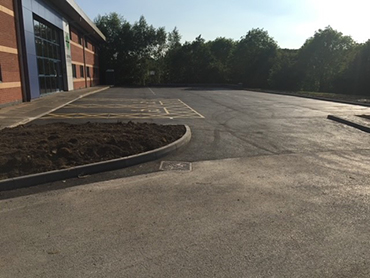
Apply a new layer of durable surfacing material, such as heavy-duty asphalt or concrete, to resurface the roads within the industrial estate.
Utilise appropriate paving equipment and techniques to ensure proper thickness, compaction, and smoothness of the new surface layer, capable of withstanding heavy industrial traffic.
Consider incorporating additives or reinforcements, such as fibers or polymers, to enhance the strength and resilience of the pavement, particularly in high-traffic areas.
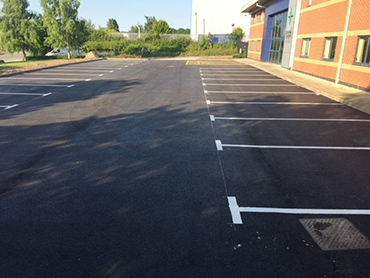
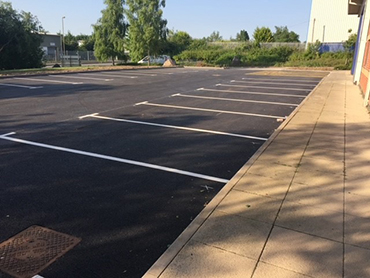
Install pavement markings, signage, and safety features, such as speed bumps or designated pedestrian crossings, to enhance traffic flow and safety within the industrial estate.
Conduct a final inspection to ensure that the resurfaced roads meet quality standards and comply with relevant regulations, including those related to industrial safety and accessibility.
Establish a proactive maintenance plan to preserve the integrity and functionality of the resurfaced roads within the industrial estate.
Encourage feedback from businesses and stakeholders within the estate to identify areas for improvement and inform future maintenance efforts.